
A perfume brand combines product development, brand strategy, and cosmetics law. Choosing a pleasant scent and placing a logo on the bottle will not produce a viable business. You need a defined customer, sound unit economics, and partners who can manufacture each batch to the same standard.
1. Set the positioning before the product
Your positioning determines who understands and buys the fragrance. Define the occasion, price range, and reason a customer would choose your brand over an established alternative. A broad claim such as “premium perfume for everyone” gives the perfumer and sales team no useful direction.
- Customer: lifestyle, buying occasion, and available budget
- Brand promise: a concrete benefit or recognisable point of view
- Sales channel: your own shop, retailers, studios, or an existing community
- Price position: aligned with product costs, margin, and customer expectations
2. Choose the right fragrance development route
You can work with an existing fragrance composition or commission a custom scent. Existing compositions shorten the process and reduce entry costs. Custom development gives you more control over the olfactory signature, but requires more sampling, feedback, and budget.
A useful brief describes how the fragrance should feel and who will wear it. A list of popular brands cannot replace those decisions.
3. Budget for the full product
A fixed startup figure would mislead you. Order quantity, custom components, and sales channel can change the budget by a wide margin. A stock bottle with a custom label costs less than a proprietary glass mould. Smaller production runs reduce committed capital but tend to raise the unit cost.
- Fragrance composition and samples
- Bottle, pump, cap, label, and folding carton
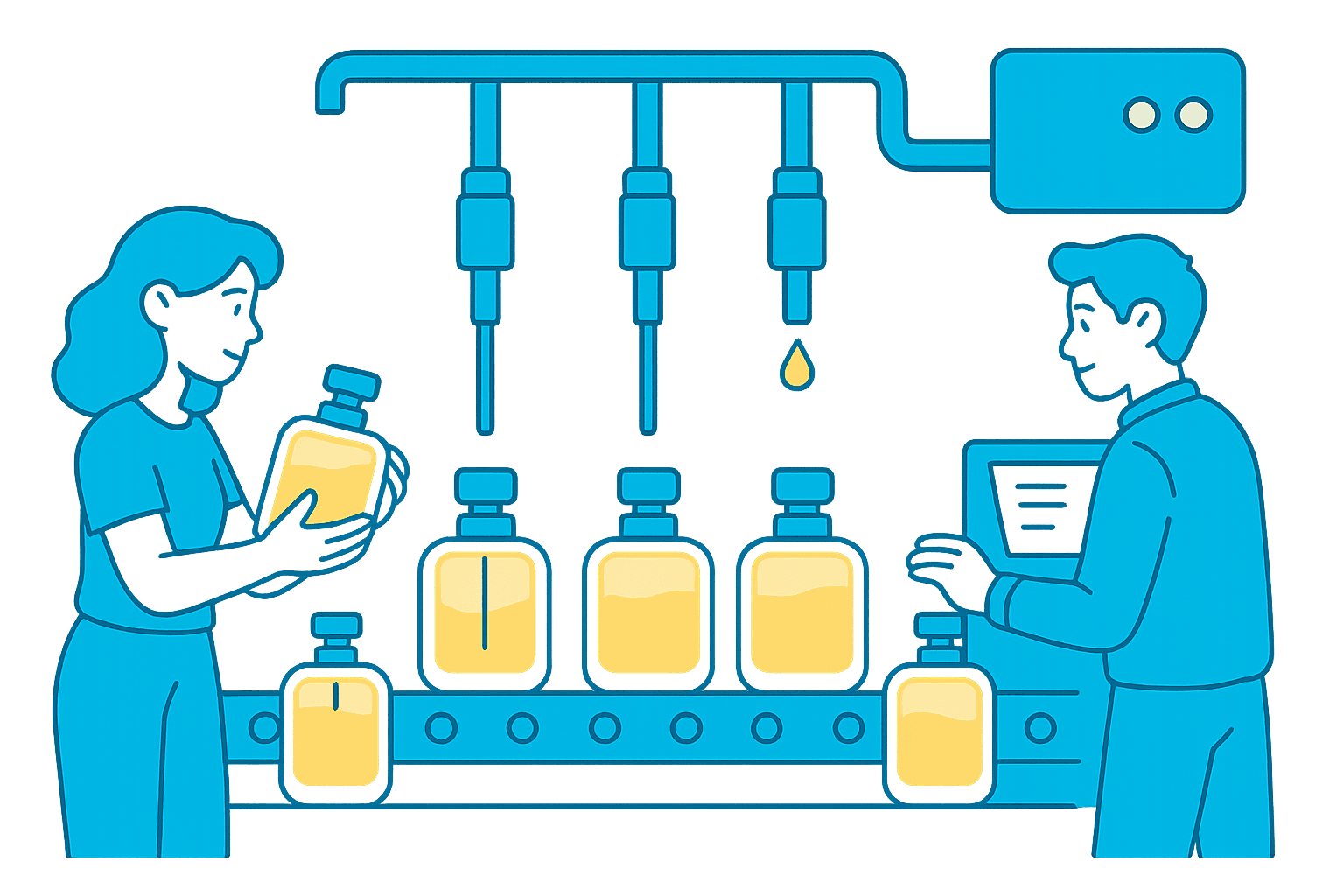
- Filling, labelling, and packing
- Safety assessment, product notification, and documentation
- Shop, photography, samples, and launch
4. Meet the EU legal requirements
The European Union regulates perfume as a cosmetic product. Before sale, you need a safety assessment, a product information file, and a CPNP notification. The packaging must show the ingredients, nominal content, batch code, and responsible person in the required format.
5. Control production and quality
Ask suppliers for clear minimum quantities, lead times, and quality controls. Agree who procures components, records batches, and replaces defective goods. Test samples with the final pump and bottle. Only this combination reveals spray performance, leakage, and material compatibility.
6. Build a realistic launch timeline
Allow several months for a structured project. Stock components and an existing fragrance composition save time. Custom scent rounds, special colours, and made-to-order packaging extend the schedule. Add a buffer for approvals and supplier delays.
Common questions
How long does it take to develop a perfume brand?
Many projects take three to six months. Custom components and several fragrance rounds can extend the schedule.
Do I need to hire my own perfumer?
No. A full-service partner can coordinate fragrance development, sourcing, documentation, and production. You still need a clear brief and defined approval process.
Can I start with a small production run?
That depends on the fragrance, bottle, and packaging. Stock components tend to support lower minimum quantities than custom-made parts.